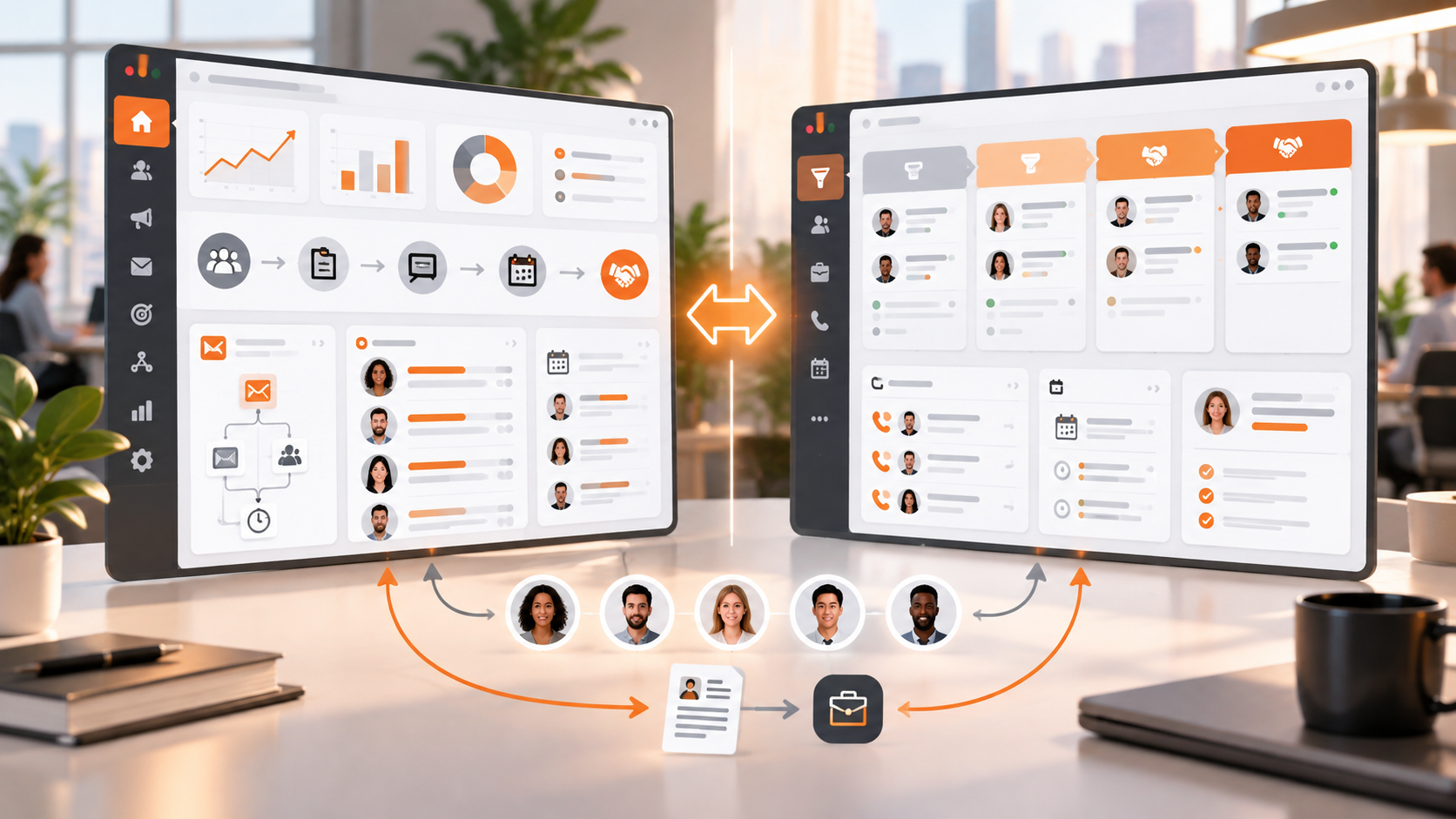
AI can remove repetitive work from recruitment, but it should not become an excuse to automate high-stakes hiring decisions without oversight. The safest starting point is operational workflow, not autonomous candidate judgement.
Useful recruitment AI automation
- Employer enquiry routing: classify inbound enquiries by sector, location or service and assign them to the right consultant.
- Candidate administration: acknowledge applications, request missing information and schedule screening calls.
- CRM hygiene: summarise notes, create tasks and flag stalled opportunities for review.
- Drafting support: prepare first drafts of outreach, job-copy variations or meeting summaries for human approval.
- Reporting: consolidate source, response and pipeline data so teams spend less time building manual reports.
Where human judgement must stay central
Do not treat an opaque AI score as proof that one candidate is better than another. Screening, suitability, equality, lawful data use and final decisions need appropriate human governance. Sensitive or consequential workflows deserve more control, not less.
Controls to put in place
- minimise the personal data sent into AI tools;
- document what is automated and what requires human review;
- test for obvious bias or inconsistent outputs;
- restrict access to confidential candidate and client information;
- keep an audit trail for important workflow actions.
Start with one measurable bottleneck
Choose a repetitive process with a clear before-and-after metric, such as response time, admin time or follow-up completion. Prove the workflow before expanding it.
See recruitment marketing and AI automation at Vistoplex.