Digital Marketing for Property Developers in the UK and UAE
Property developers do not have a traffic problem. They have a trust, timing, and attribution problem. A launch can generate hundreds of enquiries and still underperform if the wrong buyers respond, the sales team cannot see intent, or the marketing makes claims the legal team later has to pull back. This is especially true across the UK and UAE, where buyer behavior, regulation, broker involvement, and sales cycles differ.
This guide is for property developers, marketing directors, commercial leads, and sales teams planning residential, mixed-use, new-build, or off-plan launches in the UK and UAE. It is not for estate agents looking for basic listing tips. By the end, you will have a practical framework for building demand, capturing better leads, measuring launch performance, and reducing wasted spend across SEO, paid media, content, automation, and reporting.
Table of contents
- Why is digital marketing for property developers UK UAE different from generic property marketing?
- What should a developer marketing system actually do?
- Which channels create the strongest property launch pipeline?
- How should UK and UAE campaigns differ without fragmenting the brand?
- What should you measure before spending more on ads?
- What does compliant property developer marketing look like?
- Which mistakes waste budget before a property launch?
- How do you turn interest into reservations, viewings, and sales?
- What should your 30/60/90 day action plan look like?
- Which tools, templates, and resources make execution easier?
- FAQ
Why is digital marketing for property developers UK UAE different from generic property marketing?
Digital marketing for property developers UK UAE has to sell a project before, during, and after launch, often before the buyer can experience the finished asset. That means the campaign must build belief, explain risk, qualify intent, and connect marketing activity to sales outcomes across a longer decision cycle.
Generic property marketing often starts with a listing. Developer marketing starts much earlier. A buyer might first discover the scheme through a planning story, a neighbourhood guide, a broker recommendation, a Google search, an Instagram video, or an investor webinar. The conversion may happen weeks later by phone, WhatsApp, showroom visit, or broker handoff.
This creates four challenges:
- Demand must be created before availability peaks.
- Trust must be built before the asset is complete.
- Lead quality matters more than lead volume.
- Offline sales activity must be tied back to digital source data.
Key takeaway: A property launch is not a campaign. It is a timed commercial system that links brand, project proof, audience building, sales follow-up, and attribution.
The misconception: “Portals are enough”
Portals can be useful. They can capture buyers already searching and give a project early reach. But they are not a complete strategy. If your only visibility is rented visibility, you have limited control over storytelling, remarketing, email nurture, search visibility, data ownership, and attribution. You also compete side-by-side with similar schemes.
A developer needs owned assets too:
- A project landing page or microsite
- Development-specific SEO content
- Paid search and paid social funnels
- Retargeting audiences
- CRM workflows
- Broker and sales team assets
- Campaign dashboards
A portal can generate enquiries. It does not build your long-term demand engine.
What should a developer marketing system actually do?
A strong property developer marketing system should move the right buyer from awareness to enquiry, then from enquiry to qualified conversation, viewing, reservation, or sale. It should also show which channels influenced that journey, not just which form the buyer completed last.
Think in five layers.
1. Position the development clearly
Most weak launches sound interchangeable: “Luxury living in a prime location.” That says almost nothing. A stronger positioning statement answers:
- Who is this for?
- Why this location?
- Why this developer?
- Why buy now?
- What trade-off is the buyer accepting?
- What proof supports the claim?
For example:
Weak: Luxury apartments in Manchester.
Stronger: Design-led apartments for first-time buyers and young professionals who want city access without city-centre pricing.
2. Build an owned conversion path
Every serious launch needs a controlled destination. That could be a development landing page, location hub, or full microsite. It should include:
- Project overview
- Unit mix
- Price range or pricing guidance where available
- Availability status
- Location narrative
- Transport, schools, lifestyle, and employment context
- Developer credentials
- Completion timeline
- Floorplans, CGI, and video
- Downloadable brochure
- Enquiry form
- Click-to-call
- WhatsApp where appropriate
- CRM and call tracking
For SEO and technical implementation, Google’s SEO Starter Guide is still a useful baseline because it focuses on crawlability, useful content, and search visibility fundamentals rather than hacks.
3. Create proof before you ask for trust
Developers should not wait until launch week to build credibility. Useful proof includes:
- Planning milestones
- Construction updates
- Developer track record
- Local economic context
- Independent location data
- Testimonials from previous buyers where permitted
- Case studies from completed schemes
- Energy performance and sustainability claims, where substantiated
- Broker packs and sales enablement documents
Mini case study 1: The “too many leads” launch
A UK developer launched a 64-unit commuter-town scheme with heavy Meta spend and a generic “register your interest” landing page. In month one, it generated 820 leads at £18 per lead. Sales called 310 of them. Only 24 booked viewings and 5 reserved.
After restructuring the campaign around buyer intent, the team added:
- Separate first-time buyer and downsizer landing pages
- Price-band qualification
- Call tracking
- Automated brochure follow-up
- Retargeting for people who viewed floorplans
- Local SEO content around schools and commute times
Lead volume fell to 430 in month two, but viewing bookings rose to 41 and reservations rose to 11. The improvement came from better qualification, not more traffic.
Which channels create the strongest property launch pipeline?
The strongest property launch pipeline usually combines search, paid media, content, email, retargeting, PR, portals, and CRM. No single channel carries the launch. Search captures existing demand, social creates demand, email nurtures consideration, and CRM turns enquiries into measurable sales opportunities.
Here is the practical channel mix.
| Channel | Best for | Weakness | Use it when |
|---|---|---|---|
| SEO | Long-term demand, location searches, buyer education | Slow to build | You have 3 to 12 months before peak sales push |
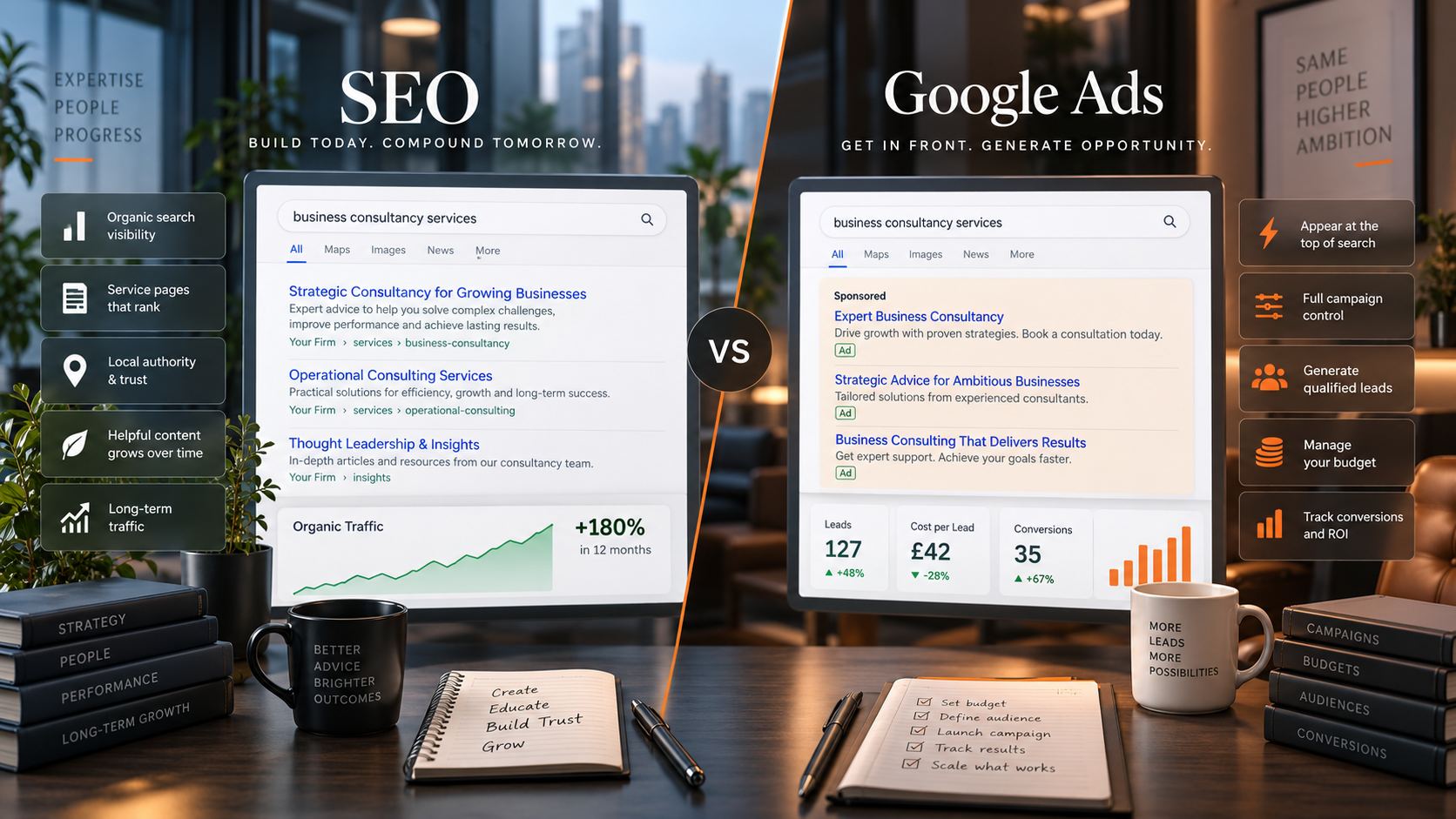
| Google Ads | High-intent enquiries | Expensive in competitive locations | Buyers are already searching for homes or investments |
| Paid social | Awareness, retargeting, visual storytelling | Can create low-intent leads | You need demand creation and audience building |
| Portals | Existing buyer traffic | Limited data ownership | You need extra reach near launch |
| Email nurture | Longer sales cycles | Needs good segmentation | Buyers need finance, location, or project education |
| PR and content | Trust, backlinks, local authority | Harder to attribute | You have a strong story, milestone, or data angle |
| Broker enablement | UAE investor reach, local networks | Message control varies | You rely on channel partners or broker sales |
| CRM automation | Speed-to-lead, qualification, reporting | Poor data ruins it | You have multiple lead sources and sales reps |
SEO for new-build and off-plan demand
Property developer SEO should not only chase broad terms. Build content around:
- [development type] in [location]
- new homes in [town/city]
- apartments near [station/district]
- off-plan property in [area]
- buying new-build vs resale in [location]
- best areas to buy near [employment hub]
- stamp duty / service charge / completion timeline questions
- payment plan / handover / reservation process questions
Paid media for launch momentum
Paid search and paid social have different jobs. Google Ads should capture intent. Meta, TikTok, LinkedIn, and YouTube should shape awareness, retarget interest, and educate buyers visually.
A simple paid media structure:
- Awareness: location, lifestyle, investment angle, developer story.
- Consideration: floorplans, payment plans, area guides, video tours.
- Conversion: brochure download, book a call, arrange viewing, register interest.
- Retargeting: pricing, availability, deadlines, open days, launch events.
CRM and automation for speed-to-lead
In property, a lead can go cold in minutes. Automations should:
- Send brochure immediately
- Notify sales with source, campaign, and buyer type
- Score leads by budget, time frame, and intent
- Trigger follow-up if no contact happens
- Segment investors, owner-occupiers, brokers, and agents
- Move qualified leads into pipeline stages
Quick win: Audit your last 100 enquiries. If you cannot see source, campaign, enquiry type, follow-up time, and outcome, fix tracking before increasing media spend.
How should UK and UAE campaigns differ without fragmenting the brand?
UK and UAE campaigns should share the same brand strategy but adapt message, proof, compliance checks, and conversion journey to market behavior. UK buyers often need local reassurance and clear material information. UAE off-plan buyers often need investor education, permit confidence, payment plan clarity, and fast WhatsApp-led follow-up.
UK property developer marketing
UK campaigns often need to work harder on local relevance. Important content angles include:
- Regeneration and local investment
- Transport links
- Schools and amenities
- Affordability and finance
- Help for first-time buyers
- New-build vs older stock comparisons
- Energy efficiency and running costs
- Developer track record
- Reservation process clarity
Be careful with pricing, incentives, availability, and comparisons. The ASA’s guidance on misleading advertising says CAP Code rules on misleading ads apply across sectors, including omissions of material information that could affect a consumer’s decision.
UAE property developer marketing
UAE campaigns often need to serve multiple buyer groups at once:
- Local owner-occupiers
- GCC buyers
- International investors
- HNW buyers
- Brokers and channel partners
- Relocating professionals
Dubai off-plan campaigns also need strong regulatory discipline. Dubai Land Department’s real estate ad permit service requires applicants to use the Tarakhesi system, submit required information, and receive an e-permit certificate. DLD also states that escrow account law applies to developers selling units off-plan and receiving payments from purchasers, investors, or financiers.
One brand, different market execution
Do not create two disconnected brands unless the business model demands it. Instead, create one strategic platform with localized execution:
| Element | UK emphasis | UAE emphasis |
|---|---|---|
| Primary trust proof | Local delivery, planning, buyer support | Developer credentials, permits, escrow, payment structure |
| Conversion route | Enquiry form, phone, viewing, sales office | WhatsApp, broker packs, enquiry form, investor call |
| Content | Local guides, commute, schools, finance | Area growth, ROI logic, payment plans, lifestyle, handover |
| Paid media | Search and local paid social | Search, paid social, YouTube, multilingual retargeting |
| Compliance | ASA, ICO, consumer protection, material info checks | DLD/RERA, ADREC where relevant, UAE PDPL, emirate-specific approvals |
What should you measure before spending more on ads?
Before increasing ad spend, measure qualified enquiry cost, viewing rate, reservation rate, source quality, speed-to-lead, and assisted conversions. Property sales often happen offline, so form fills alone are a poor performance metric.
The most useful dashboard is not “leads by channel.” It is “pipeline by channel.”
Track the full funnel
At minimum, track:
- Sessions by source
- Landing page conversion rate
- Brochure downloads
- Calls
- WhatsApp clicks
- Form submissions
- Qualified enquiries
- Viewing or appointment bookings
- Reservations
- Sales
- Cancellation or fall-through rate
- Revenue or pipeline value by source
For analytics setup, link this section to marketing analytics and reporting.
Attribute offline actions
Property buyers often convert through:
- Phone calls
- Sales office visits
- Broker conversations
- Events
- Repeat visits
- Email replies
That means you need:
- Call tracking
- UTM discipline
- CRM source capture
- Offline conversion import where possible
- Campaign naming conventions
- Sales-stage reporting
Mini case study 2: The UAE off-plan attribution gap
A UAE-focused off-plan campaign generated 1,900 leads in 45 days at AED 42 per lead. The paid social agency reported success. The sales team disagreed. After CRM review, only 11% of leads had a stated budget above the minimum unit price, but search leads cost AED 190 each and converted to qualified calls at 31%. Social leads converted at 6%.
The fix was not to cut social. It was to split campaigns:
- Social for retargeting and education
- Search for high-intent enquiries
- Lookalikes based on qualified leads, not all leads
- WhatsApp pre-qualification questions
- Separate broker and direct buyer funnels
Cost per lead rose. Cost per qualified opportunity fell.
What does compliant property developer marketing look like?
Compliant property developer marketing is clear, substantiated, and market-specific. It avoids exaggerated claims, hidden conditions, unclear availability, weak consent practices, and unapproved real estate advertising. Compliance should be built into the launch workflow, not added after the campaign is live.
UK compliance checks
For UK campaigns, review:
- Price claims
- “From” pricing
- Availability
- Reservation fees
- Incentives
- Completion dates
- CGI disclaimers
- Tenure and service charge references
- Sustainability claims
- Location and travel-time claims
- Email and SMS consent
- Cookie and tracking notices
The ICO’s PECR guidance says marketing emails and texts to individuals generally need consent unless the soft opt-in conditions apply, and every marketing message must identify the sender and provide an opt-out.
UAE compliance checks
For UAE campaigns, review:
- Emirate-specific real estate advertising permits
- Project registration
- Escrow references for off-plan sales
- Broker licensing and approved messaging
- Payment plan claims
- ROI or rental yield statements
- Cross-border investor targeting
- Consent and personal data handling
- WhatsApp and CRM data retention
The UAE government describes its Personal Data Protection Law as a framework for protecting confidentiality and privacy of personal information. Dubai Land Department also maintains rules and regulations for real estate advertising, promotional campaigns, escrow compliance, and communication with property owners.
Compliance note: Treat every campaign claim as evidence-led. If the sales team cannot prove a price, yield, timeline, availability, permit, travel time, or incentive, do not use it until it has been checked.
Which mistakes waste budget before a property launch?
The biggest pre-launch mistakes are launching paid media before positioning is clear, sending all traffic to one generic page, tracking only lead volume, ignoring speed-to-lead, and using creative that attracts curiosity rather than qualified demand.
Watch out for these.
Mistake 1: Optimising for cheap leads
Cheap leads are not automatically bad. But cheap unqualified leads can bury the sales team. Use qualification signals:
- Budget range
- Buyer type
- Intended use
- Purchase time frame
- Preferred unit type
- Mortgage or cash position
- Location interest
- Consent to be contacted
Mistake 2: Launching without sales enablement
Marketing cannot fix a weak follow-up process. Before spending heavily, prepare:
- Call scripts
- Objection handling
- Price and availability sheets
- Broker FAQs
- Email templates
- WhatsApp templates
- CRM stages
- Follow-up SLAs
- Open day or viewing process
Mistake 3: Using one message for every buyer
A first-time buyer, an overseas investor, and a downsizer are not buying the same thing. Segment by motivation:
| Segment | Core concern | Content needed |
|---|---|---|
| First-time buyer | Affordability, finance, process | Buying guide, deposit FAQs, local lifestyle |
| Downsizer | Trust, simplicity, comfort | Quality, accessibility, community, support |
| Investor | Yield, risk, exit, demand | Area data, rental logic, payment plan |
| Overseas buyer | Process, compliance, distance | Legal steps, virtual tours, documentation |
| Broker | Sellability, commission, proof | Broker pack, availability, project summary |
Mistake 4: Waiting until launch month to start SEO
SEO needs time. If the first landing page goes live when paid ads start, you are already behind. Start content 90 to 180 days earlier where possible.
How do you turn interest into reservations, viewings, and sales?
Turn interest into sales by reducing friction, qualifying intent early, and giving the sales team complete context. Every enquiry should trigger the right follow-up, proof asset, and next action based on buyer type, not a generic “thanks for your interest” email.
Build the conversion journey around buyer readiness
Not every lead is ready to speak to sales. Create three routes:
- High intent: call, WhatsApp, book viewing, speak to sales.
- Medium intent: download brochure, check availability, join launch list.
- Early stage: read area guide, watch video, use affordability or investment calculator.
Use content as sales support
Useful content includes:
- Area guide
- Buyer process guide
- Reservation guide
- Payment plan explainer
- New-build vs resale comparison
- Off-plan risk and due diligence guide
- Construction milestone updates
- “What happens after I enquire?” page
This is where content strategy supports sales, not just rankings.
Score and route leads
A practical scoring model:
| Signal | Score |
|---|---|
| Viewed pricing page | +10 |
| Downloaded brochure | +8 |
| Clicked WhatsApp | +10 |
| Budget matches available stock | +20 |
| Time frame under 3 months | +15 |
| Returned 3+ times | +6 |
| Investor content only, no budget | +3 |
| Invalid phone or email | -20 |
This does not need to be complex. It needs to be used.
What should your 30/60/90 day action plan look like?
A 30/60/90 day plan should first fix positioning, tracking, and conversion assets, then build channel campaigns, then optimize around qualified pipeline data. Do not scale media until the website, CRM, sales process, and compliance checks can handle the demand.
Days 1 to 30: Build the launch foundation
- Define audience segments
What to do: Split buyers by owner-occupier, investor, overseas buyer, broker, and local buyer.
Why: Each group needs a different proof set.
Measure: Approved messaging matrix.
Time investment: 4 to 8 hours. - Audit claims and compliance
What to do: Check pricing, availability, CGI, incentives, permits, data capture, and consent wording.
Why: Prevent campaign rework and reputational risk.
Measure: Signed-off claims register.
Time investment: 6 to 12 hours. - Create or improve the landing page
What to do: Build a page with project proof, enquiry routes, brochure, call tracking, and CRM capture.
Why: Paid media is only as good as the destination.
Measure: Conversion rate, form completion, call clicks.
Time investment: 15 to 30 hours. - Set up tracking
What to do: Configure GA4, CRM fields, UTMs, call tracking, and dashboard views.
Why: You need source-to-sale visibility.
Measure: Test leads appear correctly in CRM and dashboard.
Time investment: 8 to 16 hours.
Days 31 to 60: Launch controlled campaigns
- Build search campaigns
What to do: Target development, location, new-build, off-plan, and competitor-adjacent queries where appropriate.
Why: Capture existing demand.
Measure: Cost per qualified enquiry.
Time investment: 10 to 20 hours. - Build paid social and retargeting
What to do: Run creative by buyer segment and funnel stage.
Why: Create demand and re-engage warm prospects.
Measure: Engaged visits, brochure downloads, qualified lead rate.
Time investment: 12 to 24 hours. - Publish SEO support content
What to do: Create area guides, buyer FAQs, process content, and comparison pages.
Why: Build organic visibility and sales confidence.
Measure: Impressions, rankings, assisted enquiries.
Time investment: 20 to 40 hours.
Days 61 to 90: Optimise for pipeline, not leads
- Review lead quality by channel
What to do: Compare source against qualification, appointments, and reservations.
Why: Reallocate spend based on sales value.
Measure: Qualified opportunity cost and reservation rate.
Time investment: 4 to 8 hours weekly. - Improve nurture journeys
What to do: Build email and WhatsApp sequences by segment.
Why: Longer-cycle buyers need repeated proof.
Measure: Reply rate, booked calls, reactivated leads.
Time investment: 10 to 18 hours. - Run a conversion review
What to do: Review page heatmaps, form friction, sales feedback, and call recordings.
Why: Small conversion gains can change launch economics.
Measure: Landing page conversion rate and appointment rate.
Time investment: 6 to 12 hours.
Which tools, templates, and resources make execution easier?
The best tools help property developers manage tracking, creative, CRM follow-up, SEO research, reporting, and compliance review. Choose tools based on the workflow problem, not because the dashboard looks impressive.
| Tool or resource | Use | Typical cost tier |
|---|---|---|
| Google Analytics 4 | Website and campaign measurement | Free |
| Google Search Console | Organic search visibility and indexing | Free |
| Google Tag Manager | Tracking setup and event management | Free |
| Looker Studio | Reporting dashboards | Free |
| HubSpot | CRM, lead scoring, email nurture and sales pipeline | Free to £££ |
| CallRail or similar | Call tracking and attribution | ££ |
| Semrush or Ahrefs | SEO, competitor and keyword research | ££ |
| Hotjar or Microsoft Clarity | Behaviour analytics and page friction review | Free to £ |
| Canva or Adobe Express | Fast creative production and sales collateral | Free to £ |
| Vistoplex Property Launch Scorecard | Proprietary launch readiness checklist for tracking, compliance, CRM and channel planning | Free |
FAQ
What is digital marketing for property developers?
Digital marketing for property developers is the planning and execution of online activity that creates demand for new-build, mixed-use, and off-plan schemes. It includes SEO, paid media, content, email, CRM automation, call tracking, landing pages, social campaigns, broker assets, and reporting. The aim is not just to generate enquiries. It is to generate qualified enquiries that sales teams can convert into viewings, reservations, and completed sales.
How is property developer marketing different from estate agency marketing?
Estate agency marketing usually promotes existing homes or rental listings. Property developer marketing often starts before the scheme is complete and needs to sell the project, place, lifestyle, investment case, and developer credibility. They also need launch sequencing, compliance review, CRM workflows, and stronger attribution.
Which channels work best for property launch marketing?
Most property launches need a blend of channels. Google Ads captures active search demand. SEO builds long-term visibility around locations and buyer questions. Paid social creates awareness and retargets warm audiences. Email nurtures slower buyers. Portals provide extra reach. CRM automation and call tracking connect digital activity to sales outcomes. The best channel mix depends on unit value, location, buyer type, and launch timing.
Are portals enough for property developers?
Portals are useful, but they should not be the whole strategy. They can deliver reach and enquiries from people already searching, but they do not give developers full control over data, storytelling, retargeting, email nurture, or brand positioning. A stronger strategy combines portals with owned landing pages, SEO, paid media, CRM, email, call tracking, and sales enablement.
How much should a property developer spend on digital marketing?
Budgets vary widely by project size, sales urgency, market, and target buyer. A small local UK scheme may need a focused monthly budget, while a major UAE off-plan launch may require a larger multi-channel campaign across search, social, video, broker enablement, and international targeting. Plan around cost per qualified enquiry, appointment, and reservation, not media spend alone. Any percentage benchmark should be verified against margin and sales targets.
How long before launch should property marketing start?
Most developers should start 90 to 180 days before launch. Early activity builds search visibility, audience pools, content assets, PR hooks, broker materials, and CRM workflows. Paid media can then scale when pricing, availability, compliance approvals, and sales processes are ready. Starting earlier also gives teams time to test messaging before the most expensive launch period.
What should property developers track?
Track the full journey from source to sale. Key metrics include landing page conversion rate, cost per enquiry, cost per qualified enquiry, call volume, WhatsApp clicks, viewing rate, reservation rate, sales cycle length, cancellation rate, and pipeline value by channel. Developers should also track speed-to-lead because slow follow-up can waste expensive campaign demand.
How should UK and UAE property campaigns differ?
UK campaigns often need stronger local SEO, affordability messaging, planning context, buyer education, and careful treatment of pricing and material information. UAE campaigns often need off-plan education, payment plan clarity, broker support, multilingual journeys, and fast WhatsApp follow-up. The brand can stay consistent, but the proof, content, and conversion route should be localized.
What compliance risks affect property developer marketing?
Common risks include misleading price claims, unclear availability, unsubstantiated ROI claims, incomplete conditions, missing permit details, weak consent wording, poor opt-out processes, and inaccurate project information. UK campaigns should consider ASA/CAP and ICO/PECR requirements. UAE campaigns should check DLD/RERA or relevant emirate requirements, advertising permits, escrow claims, and personal data handling.
Is SEO worth it for property developers?
Yes, when it is planned early and tied to the sales journey. SEO can capture searches around locations, new-build homes, off-plan projects, development names, area guides, and buyer questions. It is less useful if treated as a last-minute launch add-on. For competitive locations, expect several months of work before organic search becomes a meaningful source of qualified demand.
Closing and CTA
The most useful thing a property developer can do this week is audit the journey from first click to qualified sales conversation. Pick one live or upcoming scheme. Check whether the positioning is clear, the claims are evidenced, the landing page converts, the CRM captures source data, and the sales team can see buyer intent.
If any of those steps are missing, more media spend will amplify the weakness.
Vistoplex can help you map the launch system, fix tracking gaps, and build a practical channel plan for UK and UAE developments. Start with the free Property Developer Digital Marketing Audit.
Author box
Written by: Daniel Mercer, Senior Content Strategist, Vistoplex. Daniel works with UK and UAE businesses on SEO, paid media, analytics, and AI-enabled growth systems for considered-purchase sectors, including property, professional services, and healthcare.
Written by / Reviewed by / Last updated
Written by Daniel Mercer, Senior Content Strategist
Reviewed by Vistoplex Strategy Team
Last updated: 5 May 2026