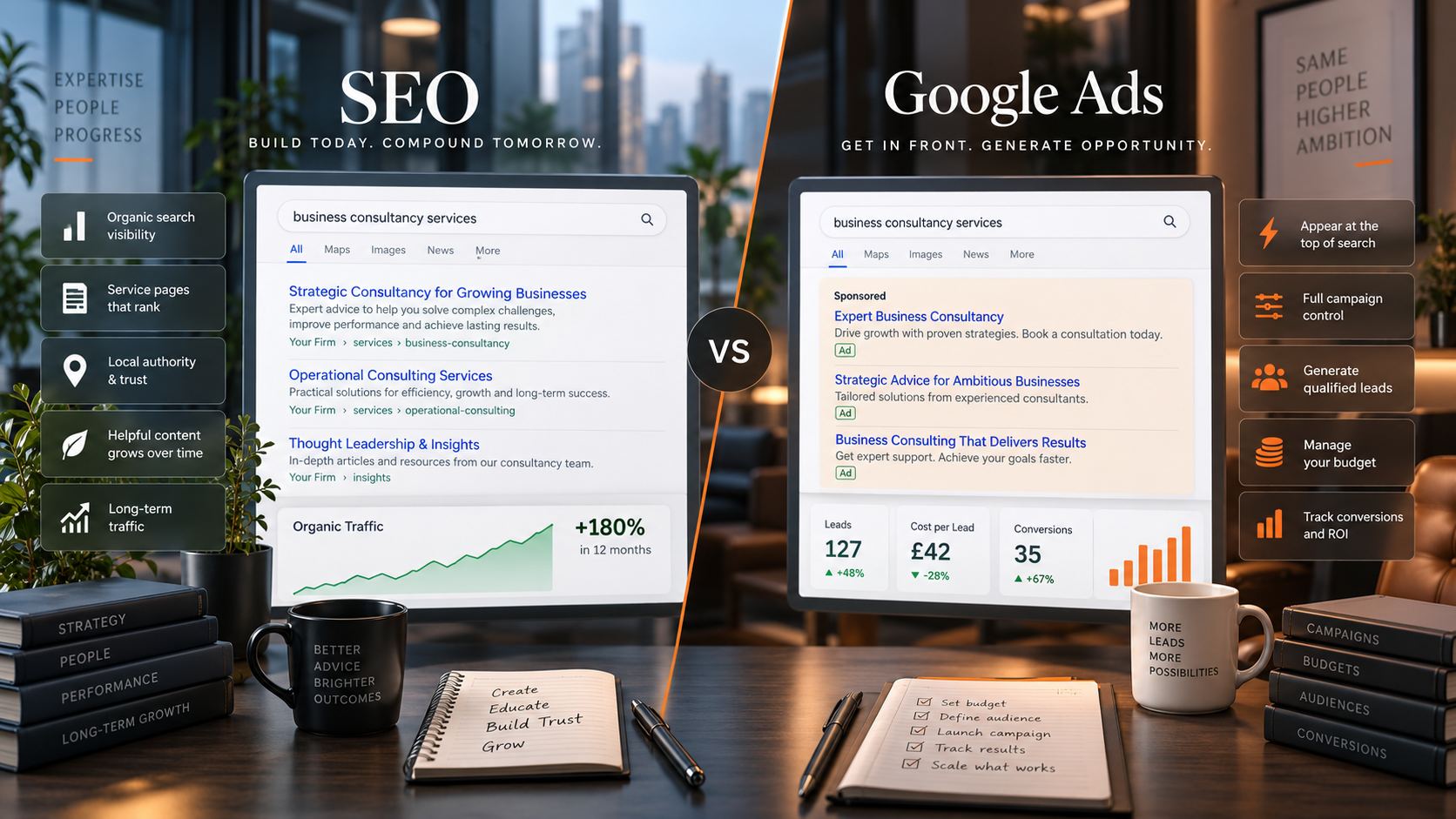
SEO for professional services should make the firm easier to find for the work it actually wants to win. The strongest strategy connects commercial search intent with credible expertise, useful service pages and measurable pipeline outcomes.
1. Map search intent to priority services
- Identify the services with real commercial priority.
- Separate service intent from broad informational queries.
- Create sector-specific pages only where the proposition is genuinely different.
- Use location pages only where location materially affects the service.
2. Build service pages around buying questions
Explain who the service is for, the problems that trigger demand, how the engagement works, who leads the work, what evidence supports the proposition and what the next step is.
3. Make expertise verifiable
- Named partners and subject-matter experts
- Relevant experience and credentials
- Real case studies or evidence
- Original expert commentary
- No invented reviewers, statistics or client outcomes
4. Fix technical and internal-link foundations
- Indexation and canonical signals
- Duplicate or competing service pages
- Mobile usability and performance
- Internal links from insights into relevant services
- Clear navigation between services, sectors and experts
5. Build content from real commercial conversations
Use questions from sales calls, proposals and delivery teams to create useful content. This produces stronger differentiation than mass-generating generic “what is X?” articles.
6. Measure qualified opportunities
Track organic enquiries, proposal opportunities and pipeline by landing page and service. Rankings and traffic are useful diagnostics, but the commercial outcome is qualified demand.
For the wider operating framework, see the 90-day professional services marketing plan.